




Children with autism often experience the world differently. Sounds can feel louder, lights can feel brighter, and certain textures can feel uncomfortable or deeply calming. These differences are part of how the brain processes sensory input, and they can affect daily routines like getting dressed, eating meals, transitioning between activities, or settling down for sleep. That’s why many families use sensory play at home as a practical way to support comfort, engagement, and regulation in everyday moments. In this guide, you’ll find sensory activities for children with autism that are simple, safe, and easy to adjust based on your child’s needs, so you can build a routine that supports your child, and feels doable for you.
Understanding Sensory Processing
Sensory processing refers to how the brain receives and responds to information from the senses. For children with autism, this process may work differently.
Some children are sensory seekers. They look for movement, pressure, or strong input. Others are sensory avoiders. They may pull away from certain sounds, textures, or visual input. Many children show a mix of both.
The Eight Sensory Systems
Sensory activities often support one or more of these systems:
- Tactile: touch and texture
- Proprioceptive: body awareness and pressure
- Vestibular: movement and balance
- Visual: light, color, and patterns
- Auditory: sound and rhythm
- Olfactory: smell
- Gustatory: taste
- Interoception: internal signals like hunger or emotional cues
Understanding these systems helps parents choose activities that feel supportive instead of overwhelming.


How Sensory Activities Support Daily Life
Many families use sensory play as part of their child’s routine. These activities may help:
- Support calm and emotional regulation
- Improve focus and engagement
- Encourage motor skill development
- Ease transitions between activities
- Create positive parent–child interactions
Sensory strategies are not a cure or a replacement for therapy. Instead, they are often used as supportive tools that fit into everyday life.
15 Parent-Friendly Sensory Activities for Kids with Autism to Try at Home
Below are simple ideas that can be adjusted based on your child’s interests and comfort level.
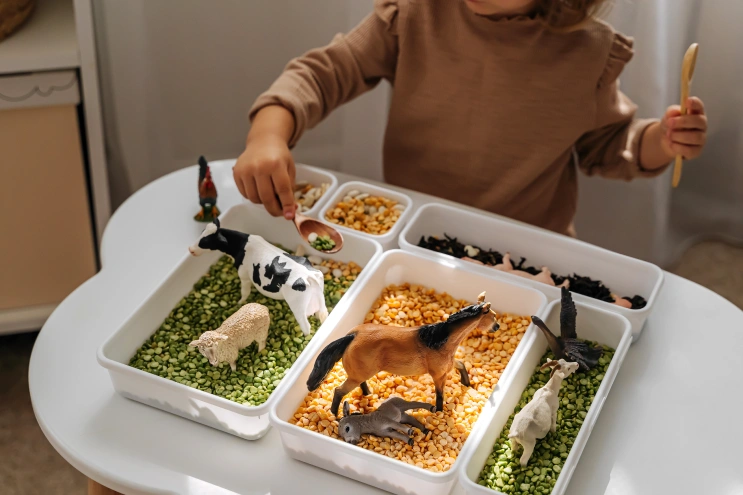
1. Sensory Bins for Tactile Play
Fill a container with rice, beans, pasta, or kinetic sand. Add cups or scoops. This allows hands-on exploration and texture exposure.
2. Playdough, Putty, or Clay
These materials support hand strength and tactile input. Rolling, squeezing, and shaping can feel grounding for many children.
3. Water Play
Use cups, spoons, or floating toys in warm or cool water. Water play offers calming sensory input and encourages exploration.
4. Nature Texture Exploration
Let your child touch leaves, rocks, grass, or tree bark. Nature provides rich sensory input without added stimulation.
5. Calming Sensory Bottles
Fill bottles with water, glitter, or beads. Slow movement inside the bottle can support visual calming and focus.
6. Proprioceptive “Heavy Work”
Have your child push a laundry basket, carry books, or help move pillows. Deep pressure activities often feel regulating.
7. Simple Obstacle Courses
Use pillows, tunnels, or chairs to create a safe path. Crawling, climbing, and stepping build body awareness.
8. Gentle Swinging or Rocking
Slow, steady movement supports vestibular input. Linear motion is often more calming than spinning.
9. Jumping and Movement Breaks
Jumping on a soft surface or trampoline provides movement input for children who seek activity.
10. Visual Light and Color Play
Use light tables, colored paper, or shadow play. Keep visual input soft and predictable.
11. Music and Sound Exploration
Clapping, simple instruments, or preferred music help with auditory input and rhythm awareness.
12. Safe Scent Exploration
Let your child smell herbs, citrus peels, or scented playdough. Always introduce smells slowly.
13. Oral Sensory Activities
Blowing bubbles, using straws, or approved chew tools can support oral sensory needs when appropriate.
14. Mindfulness and Breathing Activities
Simple breathing exercises or body check-ins help children notice internal signals.
15. Creating a Calm Sensory Space
A quiet corner with pillows, soft lighting, and calming sensory toys for children with autism can offer a place to reset when needed.
How to Choose the Right Sensory Activities for Your Child
There isn’t one “best” sensory activity for every child. The goal is to find activities that feel supportive for your child in your home. Sensory needs can also change depending on the time of day, the setting, sleep, hunger, stress, or transitions. The most helpful approach is to observe, test small changes, and keep what works.
Observe Your Child’s Cues
Start by noticing what your child does during everyday moments. Do they cover their ears, avoid certain fabrics, or pull away from messy play? Or do they crash into cushions, spin, chew on objects, or seek constant movement? These patterns can be clues about what sensory input your child avoids or seeks. Watch for signs that an activity is supporting regulation, such as calmer breathing, slower movement, more flexible behavior, or easier transitions. Also watch for signs of overwhelm, such as agitation, shutting down, escaping, or refusal.
Match Activities to Sensory Needs
Once you spot patterns, choose activities that “fit” the sensory system your child may need support with. If your child seeks body pressure or seems restless, proprioceptive activities (like pushing, pulling, carrying, or squeezing) may feel grounding. Or if your child craves movement, try controlled vestibular input, like gentle swinging or rocking. If your child avoids noisy spaces, start with quiet tactile play or visual calming activities. If your child dislikes sticky textures, begin with dry materials first, then slowly introduce messier options over time. The best match is often the one your child returns to willingly.
Start Small
Introduce one new activity at a time. Keep it short—often 1 to 5 minutes is enough to see how it’s going. It also helps to start when your child is already calm, not during a meltdown or high-stress moment. If the activity is new or uncertain, offer a “try it with me” approach rather than expecting independent participation right away.
Adjust as Needed
Sensory activities should be flexible. If an activity is “too much,” adjust the intensity instead of giving up on it completely. For example, reduce sound volume, dim the lights, choose softer textures, shorten the time, or add more structure (like a simple first/then). You can also shift from high-energy input to calming input, depending on what your child needs in that moment. Keeping a quick note—what you tried, when you tried it, and what happened—can help you spot patterns and build a routine that works.
Safety Tips for Sensory Activities at Home
Sensory activities should feel safe and supportive, so a few simple precautions can help you prevent overwhelm and keep play comfortable at home.
- Always supervise activities
- Avoid forcing participation
- Stop if signs of distress appear
- Keep materials age-appropriate
- Ask an occupational therapist for guidance when unsure
Safety and comfort should always come first.
Things You Should Know About ABA
Get the must-know facts about Applied Behavior Analysis—all in one guide
Free download
Making Sensory Activities Part of Daily Routines
Sensory activities don’t have to be a big “project”; they work best when you sprinkle them into the parts of the day that already happens.
- Morning routine: Add a short movement or deep-pressure activity (like wall pushes or carrying a light item) to help your child get ready for the day.
- After school or therapy: Use a predictable “reset” activity (like a sensory bottle, playdough, or a quiet corner) to ease the transition into home time.
- During learning or homework: Try quick sensory breaks between tasks, especially if your child starts to look restless or frustrated.
- Before transitions: Use a short sensory activity right before switching activities (for example, a 2-minute heavy-work job before leaving the house).
- Evening and bedtime: Choose calming sensory input, such as gentle rocking, soft tactile play, or a calming space, to support a smoother wind-down routine.
- Community outings: Bring a small, portable sensory kit (like a fidget, chew tool if appropriate, or noise-reducing headphones) for restaurants, stores, and waiting rooms.
How Mindful Sprouts Supports Sensory Needs
At Mindful Sprouts, sensory strategies are thoughtfully integrated into therapy programs. Our team collaborates with families and professionals to support each child’s unique sensory profile.
Through ABA therapy, we help families use evidence-based strategies that fit real life. Our goal is to support children not just in therapy sessions, but across home, school, and community environments.
Conclusion: Supporting Your Child Through Sensory Activities
Sensory differences are a natural part of autism. With patience, observation, and flexibility, sensory activities can become meaningful tools for daily support.
There is no perfect routine. What matters is creating opportunities for comfort, connection, and growth one small activity at a time.
If you’d like support tailoring sensory strategies to your child’s needs, contact Mindful Sprouts to learn more about our services. You can also follow us for practical tips and parent resources on LinkedIn, Instagram, Facebook, and X (Twitter).
Frequently Asked Questions About Sensory Activities
What are sensory activities for children with autism?
Sensory activities for children with autism are play-based or routine activities that provide sensory input through touch, movement, sound, or visual experiences. Many families use them to support comfort and engagement at home.
How do I know which sensory activities are right for my child?
Observe how your child responds to different sensations. Start with simple activities and adjust based on comfort and interest.
Are calming sensory activities safe at home?
Many calming sensory activities can be safe when supervised and age appropriate. Stop if your child appears overwhelmed and seek guidance when needed.
Can sensory activities replace therapy?
Sensory activities do not replace professional therapy. They are often used alongside ABA therapy or occupational therapy as supportive tools.



Leave A Comment